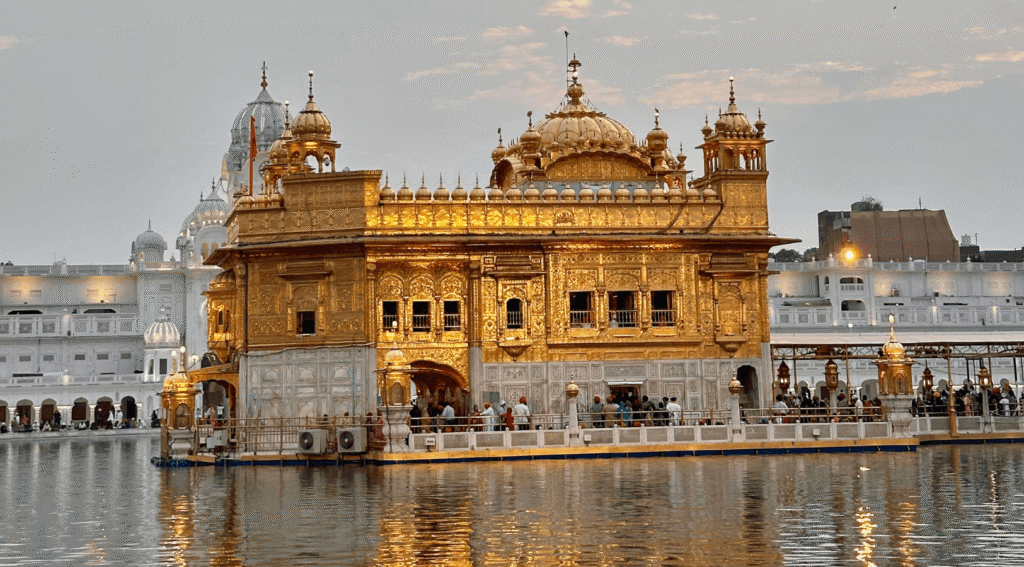

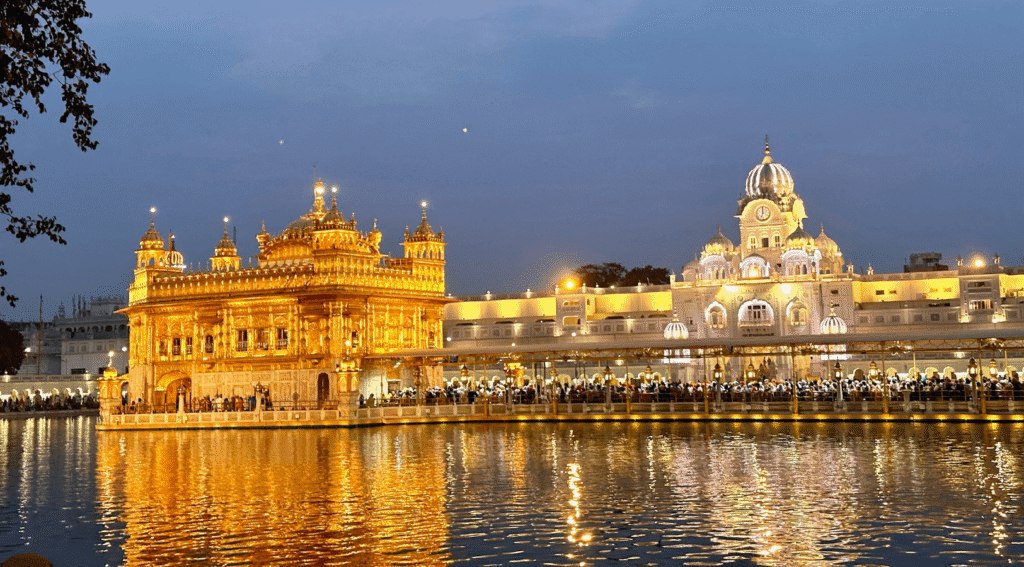
Stepping into Amritsar’s Golden Temple feels like entering a realm where time slows and the soul takes a deep, effortless breath. The soft hum of kirtan floats over the sacred waters of the Amrit Sarovar, while the golden dome glimmers in the sunlight, casting a reflection that seems almost otherworldly. This is Harmandir Sahib, the Golden Temple — not merely a monument of architectural brilliance, but a living testament to devotion, equality, and resilience. Every footstep here carries a story, every ripple in the sarovar holds a blessing, and every act of service reflects the eternal rhythm of faith
The Soul of the Golden Temple
What makes the Golden Temple truly unique is how it embodies the philosophy of Sikhism: spirituality in harmony with service. The four entrances open in all directions, symbolizing universal acceptance. Here, there is no hierarchy; everyone from every walk of life is welcomed equally. The continuous kirtan (hymns) creates a soothing vibration that resonates deep within, while the langar, the temple’s communal kitchen, nourishes thousands daily — not just with food, but with the message that service and humility are sacred acts.
Sitting by the sarovar, watching the temple’s golden reflection dance on the water, one feels an immediate sense of peace. It’s a reminder that true divinity is not distant; it is alive in service, song, and shared humanity.
A History Forged in Faith
The Golden Temple’s story began in 1577 when Guru Ram Das, the fourth Sikh Guru, initiated the excavation of the sacred pool that would surround the temple. His successor, Guru Arjan Dev, envisioned a place where all souls could meet divinity without walls or barriers. He completed the temple and installed the Adi Granth, the holy scripture of Sikhism, making the Golden Temple the spiritual and cultural heart of Sikh life.
Yet, history tested the temple’s endurance. Invaders, including Ahmad Shah Abdali, repeatedly destroyed it. Each time, it was rebuilt with renewed devotion. In the 19th century, Maharaja Ranjit Singh gilded the sanctum with gold, giving the temple its iconic golden glow. Even the tragic events of 1984 could not dim its spirit; the temple’s resilience stands as a beacon of faith, courage, and renewal. Every marble step and golden panel reflects centuries of devotion and perseverance
What Makes It Special
The Golden Temple is more than a sacred site—it is a philosophy embodied in stone, song, and service. Sikhism teaches that spiritual life cannot be separated from worldly life, and here, that truth lives every day.
The langar, one of the world’s largest community kitchens, feeds thousands daily. Men, women, and children from all walks of life sit together on the floor as equals, sharing a humble yet nourishing meal. The practice of seva, or selfless service, gives every visitor a chance to be part of something greater than themselves—whether by cooking, cleaning, or serving.
The temple’s foundation, said to have been laid by the Sufi saint Mian Mir at Guru Arjan’s invitation, reflects an openness that still defines the space. Its ceaseless hymns, sung in devotion, leave an imprint on the heart long after departure.
Why the Golden Temple Matters
Visiting the Golden Temple is more than sightseeing—it is a journey inward. The architecture alone inspires awe, but the experience is far deeper. Sharing a meal in the langar, sitting quietly by the sarovar, or simply listening to the ceaseless hymns, visitors are invited to feel the essence of equality, humility, and collective devotion.
Festivals like Baisakhi in April and Guru Nanak Gurpurab in November transform the temple into a celestial celebration of light and devotion. Yet, even in quiet hours before dawn, the Golden Temple radiates a spiritual energy that lingers long after you leave. Here, every act of presence — walking barefoot, serving in the kitchen, or sitting in stillness — becomes a sacred interaction with the divine
Journey with Grace
To receive the full grace of the Golden Temple, approach it with mindfulness and reverence:
- Cover your head and dress modestly, as a sign of respect.
- Visit during Amrit Vela (pre-dawn prayers) or return at night when the temple glows like liquid gold beneath the stars.
- Sit quietly by the sarovar; sometimes, stillness teaches more than movement.
- Offer your hands in seva (selfless service) in the langar or cleaning. Here, service transforms travel into devotion, allowing you to connect with the temple’s soul.
- Walk slowly, observe, and feel — the smallest gestures of presence matter in a place of such sacred energy.
Best Time to Visit
The Golden Temple welcomes pilgrims year-round, but certain times make the experience even more magical:October to March: Cool, comfortable weather for walking, exploring, and reflection.
October to March: Cool, comfortable weather for walking, exploring, and reflection
April (Baisakhi): A festival that fills the temple complex with vibrant colors, processions, and celebration.
November (Guru Nanak Gurpurab): The temple is illuminated with thousands of lamps, creating a mesmerizing spectacle.
Even monsoon months offer a poetic charm, with rain glimmering on the marble and clouds hovering over the sarovar.
Questions Pilgrims Often Carry
Why is the Golden Temple so famous?
It is celebrated not only for its golden beauty but also for its embodiment of equality, service, and devotion. Every visitor experiences its message of humility and the sacred rhythm of Sikh practice.
Is the temple open to all faiths?
Yes. The four entrances symbolize openness to all people, irrespective of religion, background, or culture.
What should I not miss while visiting?
Attend Amrit Vela prayers, experience the temple at night, sit by the sarovar, and participate in the langar to fully feel the temple’s spiritual essence.
Are there any rules to follow?
Remove shoes, wash your feet, cover your head, and dress modestly. Respect flows naturally here, making the experience authentic and transformative.
When is the best time to visit?
While the temple is open year-round, October to March is ideal. Festivals like Baisakhi and Guru Nanak Gurpurab provide a spectacular, immersive experience.
A Cosmic Note
When I first sat by the sarovar, watching the golden dome reflected in the still water, the world outside seemed to vanish. The hum of hymns, the warmth of the langar shared with strangers, and the soft glow of the temple illuminated something inside me. The Golden Temple is not just a destination; it is a living experience — a place where devotion, humility, and equality are not taught but lived.
Here, every ripple, every song, and every act of service whispers a timeless truth: the divine is present in all hearts, and the greatest treasure is the peace and transformation we carry back into the world.